Are deepfakes illegal? Deepfake laws, mapped by trigger
Making a deepfake is not a crime by itself anywhere in the US. It turns on what it shows, where it is published and whether the person consented in the form the law requires: publishing an intimate deepfake of an adult is a federal crime with up to 2 years in prison.
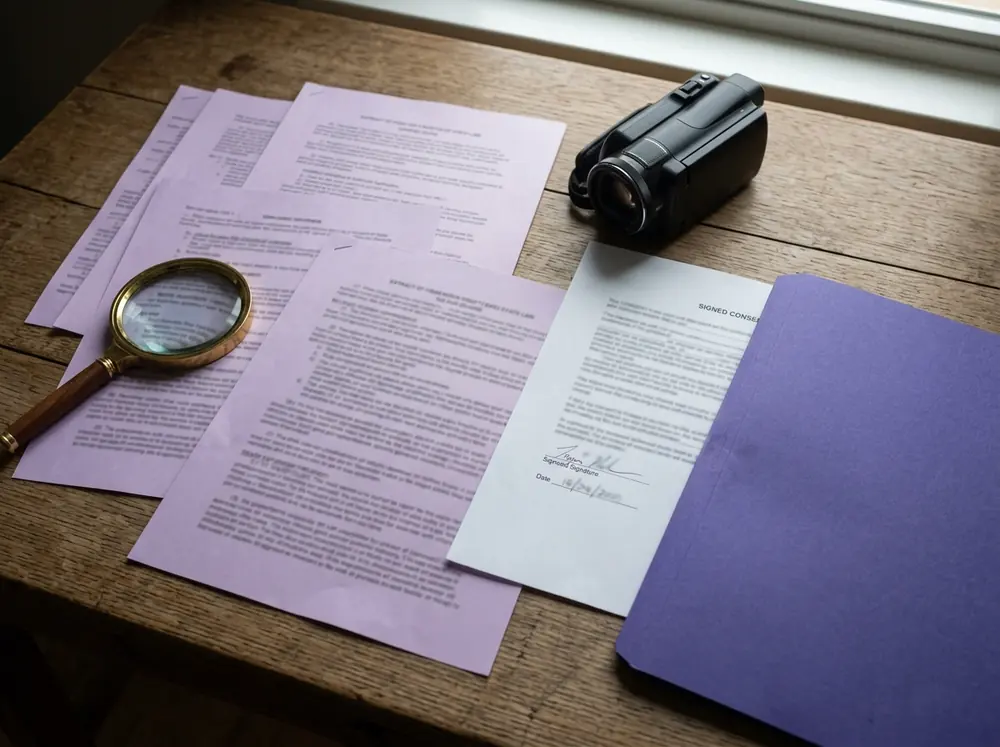
Checked against statute text
- Jurisdictions
- US federal, 5 states, EU
- Triggers
- 6
Are deepfakes illegal? It depends on four things
What it shows, where it is published, whether the person consented, and who you are.
| Trigger | Federal | California | Texas | Minnesota | Virginia | New York | EU |
|---|---|---|---|---|---|---|---|
| Intimate imagery | TAKE IT DOWN Act (Pub. L. 119-12): fine and up to 2 years; 3 if a minor | Civ. Code 1708.86: $1,500 to $50,000 per work, up to $250,000 with malice | Penal Code 21.165: Class A misdemeanor; felony if under 18 or repeat | 604.32: civil penalty up to $100,000 | 18.2-386.2: Class 1 misdemeanor | No rule stated on this page | Art. 50: label duty, not a ban |
| Election communications | No rule stated on this page | No rule stated on this page | No rule stated on this page | 609.771: up to 90 days and $1,000; repeat: up to 5 years and $10,000 | No rule stated on this page | No rule stated on this page | Art. 50: label duty |
| AI-voice calls | FCC, Feb 8, 2024: AI voices are artificial under the TCPA; prior consent needed | No rule stated on this page | No rule stated on this page | No rule stated on this page | No rule stated on this page | No rule stated on this page | No rule stated on this page |
| A dead performer’s likeness | No rule stated on this page | Civ. Code 3344.1: greater of $10,000 or actual damages | No rule stated on this page | No rule stated on this page | No rule stated on this page | Dead-performer claim: $2,000 floor | No rule stated on this page |
| A living person’s likeness or biometrics | NO FAKES Act (S. 4591) is still a bill | Labor Code 927: vague replica clauses unenforceable | Bus. & Com. Code 503.001: consent before capture; up to $25,000 per violation | No rule stated on this page | No rule stated on this page | No rule stated on this page | No rule stated on this page |
| AI disclosure and labels | No rule stated on this page | Bus. & Prof. Code 22757.3: latent AI disclosure in generated video | 21.165(c-2): a label is no defense | No rule stated on this page | No rule stated on this page | Synthetic performers in ads: $1,000, then $5,000 per violation | Art. 50: disclose at first exposure; fines up to EUR 15,000,000 or 3% |
Every cell checked 2026-10-14 against the statute or regulator text. A filled dot marks a stated rule; “No rule stated on this page” (a hollow ring) means none was fetched for this page, not that no law exists.
What exactly is a deepfake?
Realistic synthetic media of a real person or event. Three legal definitions decide cases: the TAKE IT DOWN Act’s “digital forgery”, Texas 21.165 “deep fake media” and the EU’s Article 50 “deep fake”. A realistic avatar of a real person sits inside them; a stylized one nobody would take for a recording may not.
The four tests every cell applies
Which deepfakes are federal crimes?
One federal crime targets deepfakes directly; the FCC treats AI voices as artificial; there is no federal likeness right yet.
- Publishing an intimate digital forgery of an identifiable adult; covered platforms must act on a valid removal request within 48 hours (process due May 19, 2026).
- On Feb 8, 2024 the FCC ruled AI voices are artificial under the TCPA; in September 2024 it fined a consultant $6,000,000 over deepfake Biden robocalls.
- S. 4591 was placed on the Senate calendar on June 24, 2026; until it passes, likeness rights are state law.
- H.R. 5586 last moved on Sept 20, 2023 and the 118th Congress has ended, whatever page one of the search results implies.
- An intimate-image crime, a robocall consent rule and a pending likeness bill.
Which states are deepfakes illegal in?
No state bans deepfakes as such; each punishes particular uses. 30 states regulate election deepfakes (Public Citizen tracker, May 2026).
In force
Up to $250,000 for a sexual deepfake, and no disclaimer defense
In force
A Class A misdemeanor that a label cannot cure
In force
Elections, nude images and a dead performer’s replica
Does an ‘AI-generated’ label make a deepfake legal?
No. A label is a duty on top of consent rules, never a substitute for them.
-
California
A disclaimer does not defend a sexual deepfake under Civil Code 1708.86.
-
Texas
Penal Code 21.165(c-2): a “not authentic” label is no defense.
-
European Union
A label is required under Article 50, and consent rules still apply.
For avatar video
Label it and hold the consent. Neither replaces the other, whatever the vendor’s watermark says.
Is deepfake illegal in the EU?
-
EU AI Act Article 50 has applied since 2 August 2026
The EU does not ban deepfakes. Whoever publishes one must disclose that it is AI-generated or manipulated; breaches can bring fines up to EUR 15,000,000 or 3% of worldwide turnover. Providers outside the EU are covered when the output is used in the EU. -
Label at first exposure: the vendor’s watermark is not enough
The Commission’s guidance says a business publishing a deepfake must disclose it at first exposure with a visible or audible label, and cannot rely on the provider’s embedded mark.

Rules that changed in 2026
Making AI avatar video of a real person: the consent rules buyers miss
Three duties stack on a company that films a person for a custom avatar.
- The appearance release or employment agreement is where consent is written.
- Texas Bus. & Com. Code 503.001: inform first, get consent, destroy within a year of the purpose ending.
- California Labor Code 927 voids vague AI-likeness clauses for new performances since Jan 1, 2025.
- Who holds the files, who can revoke, what happens when the person leaves.
- Article 50(4), at first exposure.
- The vendor’s checkbox is the vendor’s record, not yours.
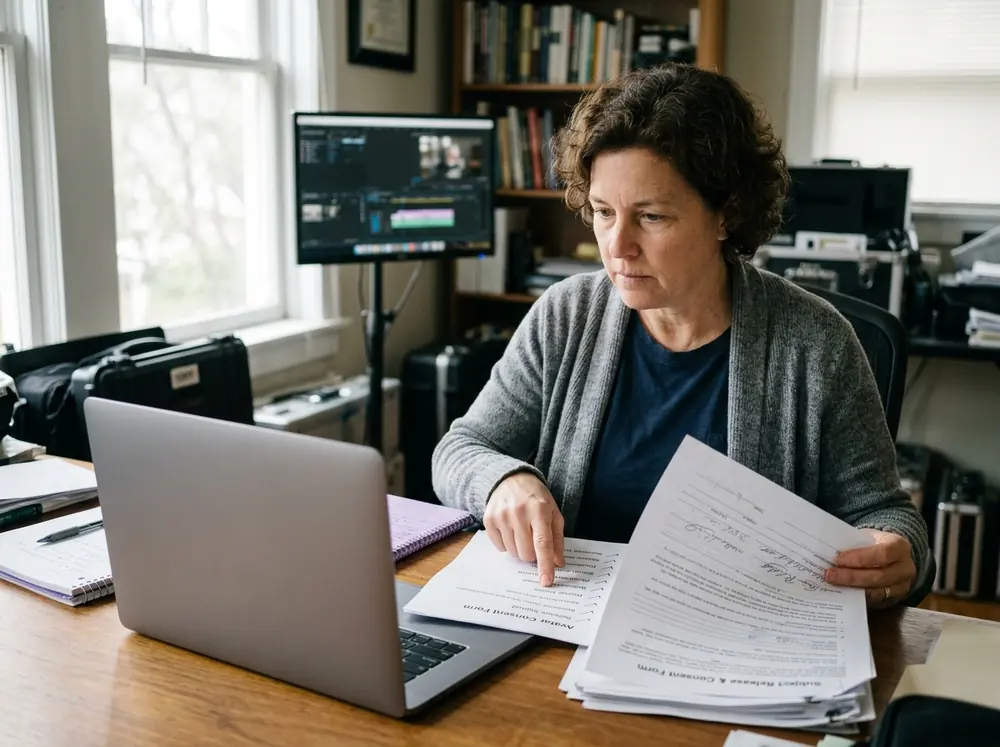
What one vendor’s consent step covers
| The question | HeyGen | What the clause says |
|---|---|---|
| Paid users own their output | Yes | Section 3: Creator, Pro and Business users keep ownership of their inputs and outputs. HeyGen Terms of Service |
| Vendor takes a training license over uploads | Yes | Section 3 also grants HeyGen a royalty-free, transferable, sublicensable, worldwide, irrevocable license, including to train its models, that survives termination. HeyGen Terms of Service |
| A documented training opt-out | Partly | Enterprise data is excluded by default; every other plan opts out by emailing HeyGen. HeyGen Security page |
| A consent check on every avatar of a real person | No | Consent applies to video-trained digital twins only; photo avatars pass no consent check and leave no consent record. HeyGen Developer Documentation, Avatar Consent |
| Free-plan output may be used commercially | No | Section 4 limits Free-plan output to personal, non-commercial and internal evaluation use. HeyGen Terms of Service |
| A stated deletion deadline for your content | Not stated | Section 5 says HeyGen may, but is not obligated to, delete user content; no deadline is given. HeyGen Terms of Service |
Clauses read on from the vendor's own terms and documentation. Self-serve terms only; enterprise contracts can differ.
Can you sue someone for making a deep fake video of you?
Often yes, under state law.
Right of publicity is state law; the federal NO FAKES right does not exist yet.
- $250,000
California 1708.86
Statutory damages up to $250,000 with malice.
- $100,000
Minnesota 604.32
Civil penalty for a nonconsensual sexual deepfake.
- $10,000
Dead-performer claims
California floor $10,000; New York floor $2,000.
- 48 h
TAKE IT DOWN removal
Platforms must act on a valid request within 48 hours.
Before you ask a platform
Keep copies, URLs and dates of every post first: removal erases the evidence a claim needs.
How this page was checked, and what it is not
-
What it is not
No legal credentials
The Humva Review Desk holds no legal credentials; it reads primary text and quotes it.
Checked from govinfo.gov/content/pkg/PLAW-119publ12/html/PLAW-119publ12.htm -
Method
Plain-language standard
Statute wording is quoted, paraphrase is plain English, penalties exactly as the statutes state them.
Checked from ai-act-service-desk.ec.europa.eu/en/ai-act/article-50 -
Sources
Attorney commentary
From recorded public talks, condensed to a written summary; quotes carry a video timestamp.
Checked from youtube.com/watch
Frequently asked questions
- None of the laws on this page makes viewing a deepfake an offense by itself; each targets producing, publishing, distributing or threatening to publish.
- Making one is not a crime by itself in the US. Sharing it is where most of the rules on this page apply, and Texas 21.165 also covers production.
- A deepfake of yourself, made and published with your own consent, is outside the intimate-image and likeness rules on this page. Labels may still apply in the EU.
- Yes, when the video shows a real person without the consent a statute requires, in a covered use: intimate imagery, elections, voice calls or a likeness used commercially.
Before you publish an avatar video of a real person
The law follows the use, not the tool
Consent you can prove, plus a label where the EU requires one; neither replaces the other. Check the date: two of these rules changed in 2026 and one federal bill is pending.
Humva Scorecard, v1
total = sum(criterion score 0-10 x weight) / 100, shown to one decimal
- 30% Cost per finished minute
- 20% Plan limits and output rights
- 20% Terms, likeness and data
- 15% Pricing transparency and stability
- 15% Independent user sentiment
Read next
HeyGen review: what its terms take from your footageScored on the same published formula.